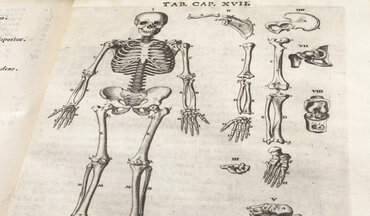
Ethics and History in the Core Medical Curriculum

At the University Medical Center Göttingen, a total of over 3,600 students are enrolled in medical and related degree programs. The And the team at the Department of Medical Ethics and History of Medicine offers courses throughout the entire medical curriculum. In addition, we offer interdisciplinary seminars aimed at students of medicine, social and cultural sciences, philosophy, and computer science.

As part of their medical studies, several hundred students each semester take courses in the history, theory, and ethics of medicine. The Institute imparts specialized knowledge on the historical and social context of medicine and on the theoretical foundations of medical ethics. We also specifically employ case discussion methods to strengthen students’ ability to argue their points and discuss ethical issues in a practical manner.

Our courses

Experienced and dedicated faculty members from the Institute teach within the med-ical curriculum. The course offerings include the following courses:

  • Medical Terminology (1st semester),
  • the interdisciplinary course History, Theory, and Ethics of Medicine (GTE) (spanning the 4th, 5th, 6th, and 8th semesters), as well as
  • the Research Ethics module.

As a rule, an elective seminar titled Current Topics in Medical Ethics is also offered during the winter semester, which is open to students in the Faculty of Philosophy and Social Sciences as well (please refer to the current announcements). In the dentistry program, we teach the exam-relevant course Ethics in Dentistry. In the BA program in Molecular Medicine, the seminar Ethics in the Life Sciences is offered.
 

Medical Terminology

Medical practice is inextricably linked to language. Every medical history, every scientific publication, and every instance of interprofessional communication requires a precise and thoughtful use of terminology. This course introduces you to the fundamentals of medical terminology and provides a solid understanding of key terms.

Please send your request for equivalency certificates via email to the secretary's office for processing.

History, Theory, and Ethics of Medicine

Medical practice does not take place in a vacuum; rather, it has evolved historically, is based on social and cultural foundations, and is subject to a constantly changing normative perspective. This course introduces you to central questions in the history, theory, and ethics of medicine and provides a well-founded understanding of how medical decisions arise at the intersection of knowledge, values, and societal developments.

Ethics in the Life Sciences

Advances in the life sciences open up new therapeutic possibilities while simultaneously raising fundamental ethical questions. This course introduces you to key positions, lines of argumentation, and controversies in bioethics and provides a structured approach to moral issues in medicine and biomedical research. The focus is on current, socially relevant topics as well as developing the ability to engage in independent and critical reflection on bioethical debates.

Supervision of Theses and Research Projects

At the Department of Medical Ethics and History of Medicine, we supervise bachelor’s and master’s theses as well as doctoral dissertations. If you are interested in writing a thesis, please feel free to contact us at any time. Please be sure to review the general guidelines on the following pages beforehand

Writing Bachelor's and Master's Theses  ➜ Pursuing a Doctorate at the Institute

Services for Students

The Department of Medical Ethics and History of Medicine supports students at various stages of their studies by providing counseling and information services. The institute’s on-site library also offers workspaces for academic research.
Advising Services for Students

Students who have not passed a retake exam may seek advice from faculty members at the Department of Medical Ethics and History of Medicine. The issuance of equivalency certificates is also reviewed and arranged by the faculty. Please direct your inquiries via email to the secretary’s office for processing.

➜ Contact the secretary’s office

Guidelines for Academic Papers

Thorough literature research is essential for writing academic papers independently. The Information and Documentation Center for Medical Ethics (IDEM) therefore provides students with tutorials and online resources for literature research. The contact person is Dr. Tobias Weidner.

Reference Library

Our reference library is one of Germany’s leading libraries in the fields of ethics, sociology, and the history of medicine. It is open to students and researchers from all disciplines, as well as anyone interested in ethics and the history of medicine. Please check our opening hours or schedule an individual appointment.

You might also be interested in

Follow us